
The most consequential problems rarely fit inside one discipline.
Raga Rubato Studio
Health technologies are shaped by more than regulatory pathways or technical evidence alone. Product decisions, clinical questions, risk, quality, organizational systems, and execution continually influence one another. Raga Rubato Studio was built to work in those intersections.
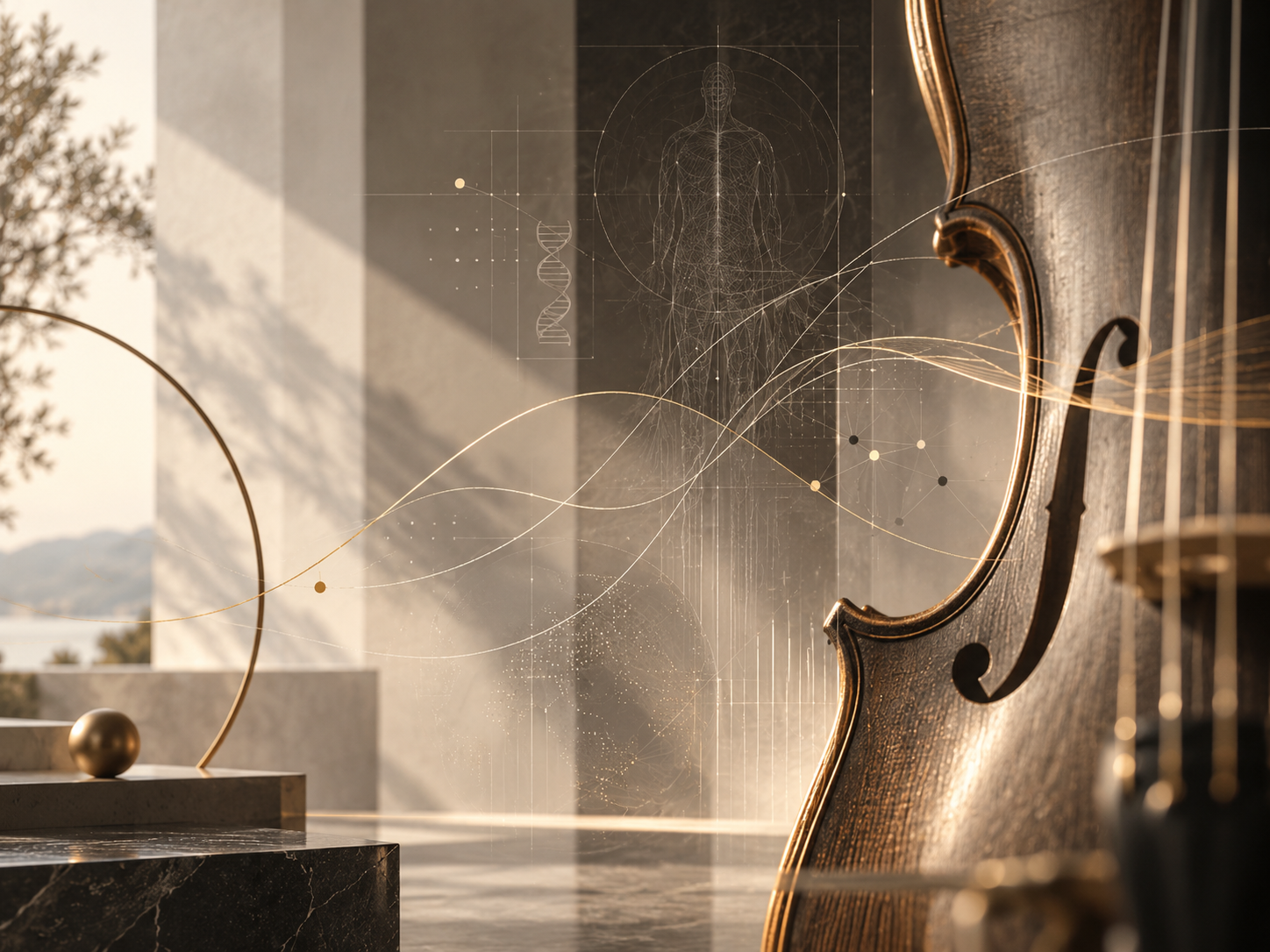
Where rigor meets interpretation.
Evidence provides structure. Judgment gives it meaning.
01
See the system.
Understand how regulatory, evidence, product, quality, and organizational decisions interact before solving one piece in isolation.
02
Find the signal.
Distill complex evidence, competing constraints, and ambiguity into decisions people can actually act on.
03
Design for movement.
Build strategies that can evolve as products, evidence, organizations, and markets change.
The studio is built for complex products, difficult decisions, and cross-functional program — especially where regulatory, evidence, technical, and organizational questions overlap.

A perspective shaped across disciplines.
Raga Rubato Studio was founded by Kanchana Iyer, a biomedical engineer and regulatory strategist whose career has moved across FDA, industry, and consulting—and increasingly across the boundaries between regulatory strategy, evidence, product development, quality, and organizational systems.
Her work has spanned medical devices, diagnostics, digital health, AI-enabled technologies, and complex product platforms. Across those settings, the recurring challenge has been the same: the hardest decisions rarely belong to one function. They require technical depth, judgment, pattern recognition, and the ability to see how seemingly separate parts of a system influence one another.
That way of thinking was shaped not only by engineering and regulatory science, but by music and movement. Kanchana trained as a Western classical violinist and also studied Bharatanatyam, one of India’s classical dance traditions. Both disciplines demand a balance of structure and interpretation: precision without rigidity, discipline without sameness, and responsiveness without losing form.
Those ideas became part of the intellectual foundation for Raga Rubato Studio. In Indian classical music, a raga provides a framework within which expression and improvisation can unfold. In Western classical music, rubato allows a performer to shape time with flexibility while preserving the underlying musical structure. Together, they reflect an approach to complex work that is rigorous but not mechanical—one that values evidence and systems thinking while leaving room for judgment, adaptation, and creativity.
The studio is built around that integration: technical rigor, strategic clarity, and the belief that better decisions often come from seeing the whole system rather than optimizing one part in isolation.
Former FDA reviewer · Biomedical engineer · Global regulatory strategy · Evidence & decision science · Organizational effectiveness
Why Raga Rubato
Structure without rigidity. Freedom without drift.
Raga
A raga provides a melodic framework with its own character, structure, and possibilities for expression. From Indian classical music , it creates coherence without prescribing every note, leaving room for interpretation and improvisation within an established form.
Rubato
Rubato is the expressive flexibility to shape tempo in Western classical music—slightly stretching or compressing time while preserving the underlying musical structure. It allows interpretation, nuance, and responsiveness without losing the piece’s essential form.
Together, they describe the way the studio approaches complex work: structure without rigidity, interpretation without drift, and the freedom to adapt without losing coherence.